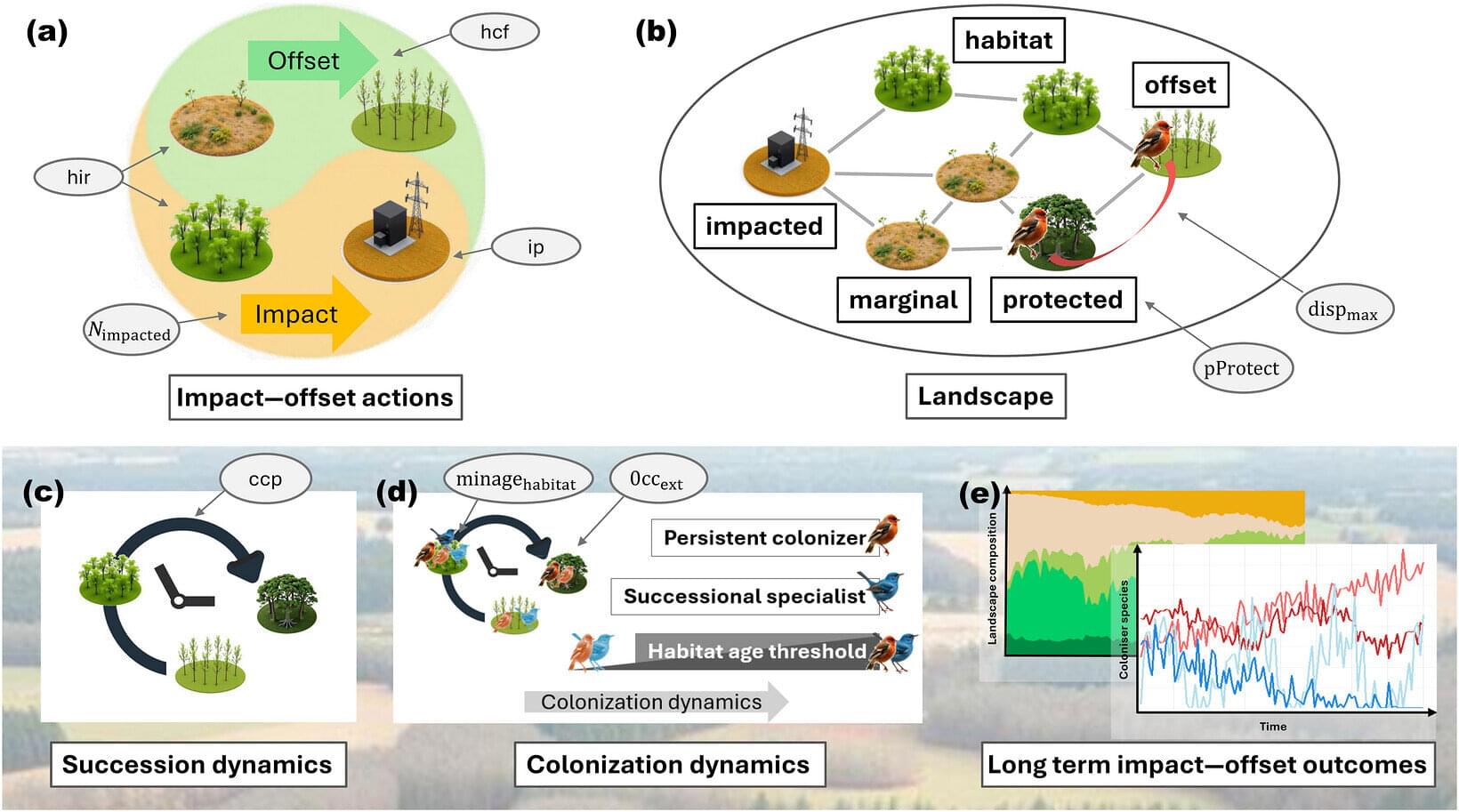
A new study identifying the ecological conditions needed for biodiversity offsetting to achieve conservation goals could provide important guidance for governments and industries as they expand biodiversity net gain (BNG) and nature restoration policies. The research is published in the journal Conservation Biology.
Biodiversity offsetting is increasingly used to compensate for environmental damage caused by development. It sees habitat loss in one location compensated through habitat restoration or protection elsewhere, with the aim of achieving no net loss of biodiversity.
The latest research, led by Swansea University in collaboration with the UK Centre for Ecology & Hydrology (UKCEH) and Forest Research, shows that biodiversity offsets are far more likely to succeed when restoration areas are larger than impacted habitats, are protected over long timescales and are designed around how ecosystems recover over time.
On July 16, 2024, a daytime meteor shook New York City with a sonic boom as it passed just south of the Statue of Liberty. Now, an international team of researchers reports in the journal Science Advances that a short time later, a meteorite weighing more than 2 pounds crashed through the roof of a house in the town of Hillsborough, New Jersey.
“A forensic study of the fragments revealed that they contained preserved bits from near the surface of a primitive asteroid, where it experienced concentrated salty fluids—a process not previously known from this type of protoplanet world,” said lead author and meteor astronomer Peter Jenniskens of the SETI Institute and NASA’s Ames Research Center in California’s Silicon Valley.
On that day, a rock the size of a heavy airline bag entered Earth’s atmosphere at a speed of 32,000 miles/h (14.4 kilometers per second). Sixty observers from New York, New Jersey, Connecticut, Rhode Island and Pennsylvania reported seeing the meteor to the American Meteor Society, while 16 in New York and New Jersey felt the shock wave.
The executive was “going to be killed,” he told the guard, and he needed to warn someone, according to records of the April 15 incident viewed by The Wall Street Journal.
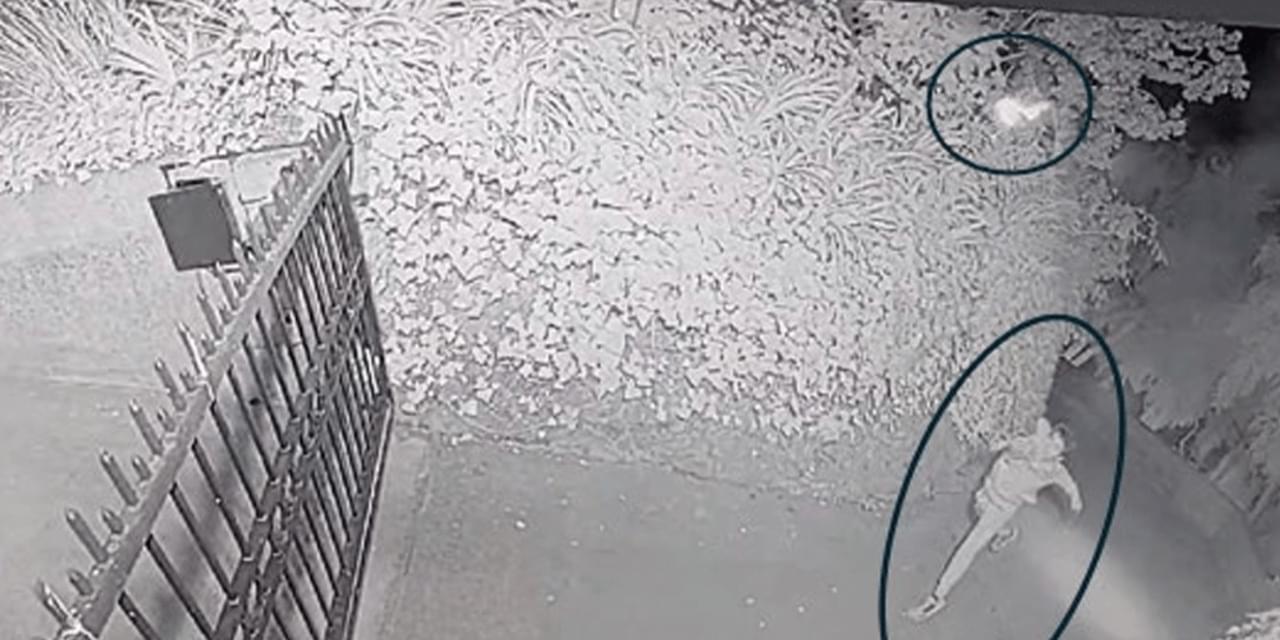
The encounter, which took place five days after an attempted firebombing of OpenAI Chief Executive Officer Sam Altman’s house, ended without violence or an arrest. But for executives at Anthropic—and across the artificial-intelligence industry—the threat was far from over.
In recent months, mounting opposition to AI has given rise to a surge of violent rhetoric, threats against people and property, and a serious attempt at harm. The phenomenon has executives at tech companies large and small reconsidering their personal security arrangements and how they talk about their products to a public that is increasingly wary of the technology and the societal changes it is ushering in.
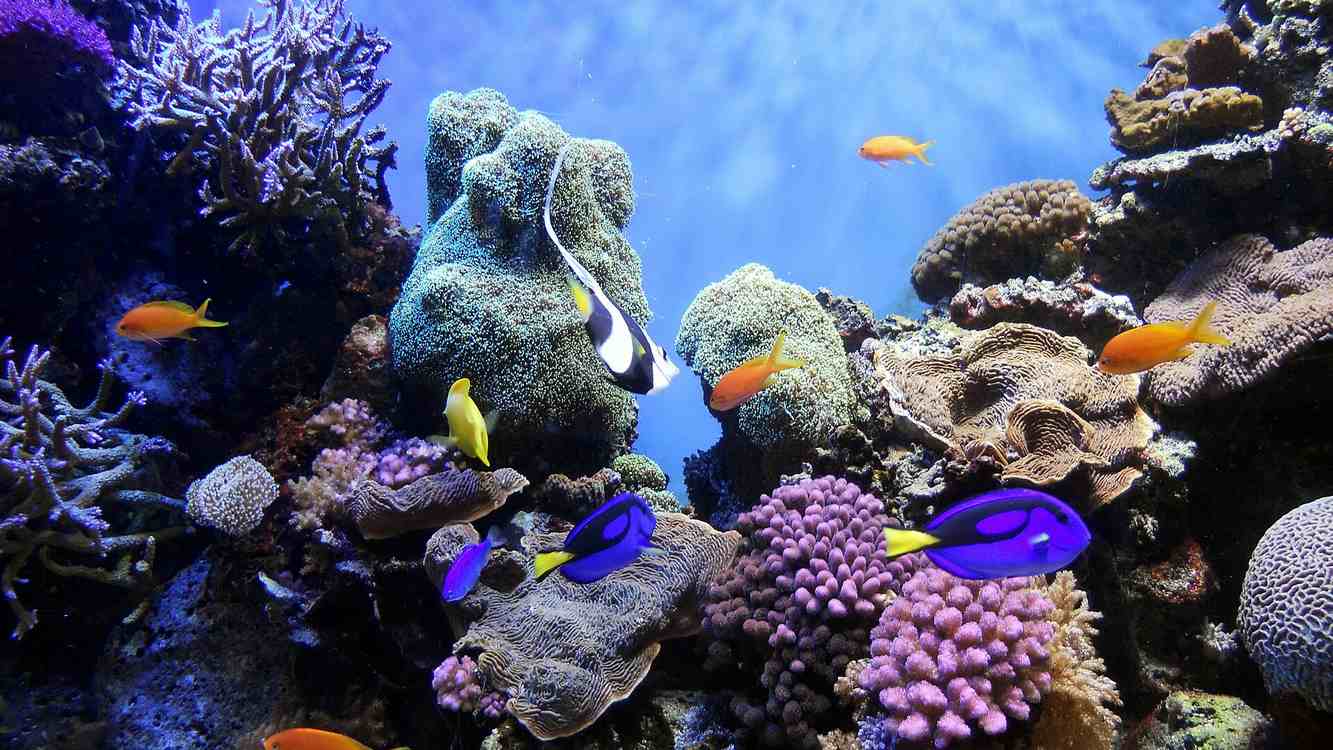
Bloomberg Philanthropies has identified a funding shortfall in the implementation of many countries’ ocean protection plans, and has attempted to fill it with a quarter-billion dollar donation.
The aim writ small is to translate the paper gains for ocean conservation and management secured with the passage of the UN’s new High Seas Treaty into real gains by helping to cover the cost of management and enforcement for small island nations that lack these resources.
The updated High Seas Treaty has been under negotiation for over 2 decades. Its passage secured major gains for the potential protection of critical ocean habitats.
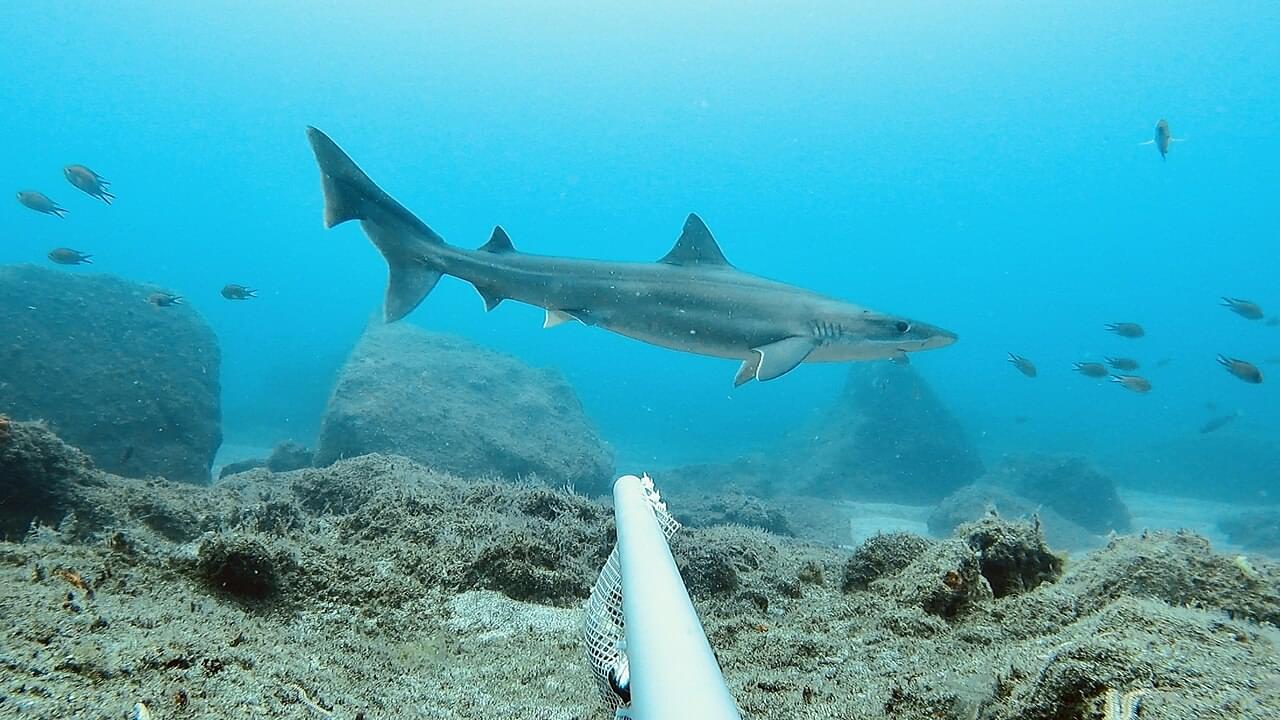
One of Britain’s largest and most endangered sharks is to be tracked through the busy waters of the Solent, following a £230,000 research grant awarded to scientists at the University of Portsmouth – part of the largest ever government investment in recovering England’s threatened wildlife.
The tope shark, listed as critically endangered on the IUCN Red List, can grow to nearly two metres in length, yet remains largely invisible to the public despite living in some of the UK’s most heavily trafficked coastal waters.
Facing sustained pressure from overfishing, bycatch, habitat loss and wider environmental change, tope populations have declined significantly across their global range.
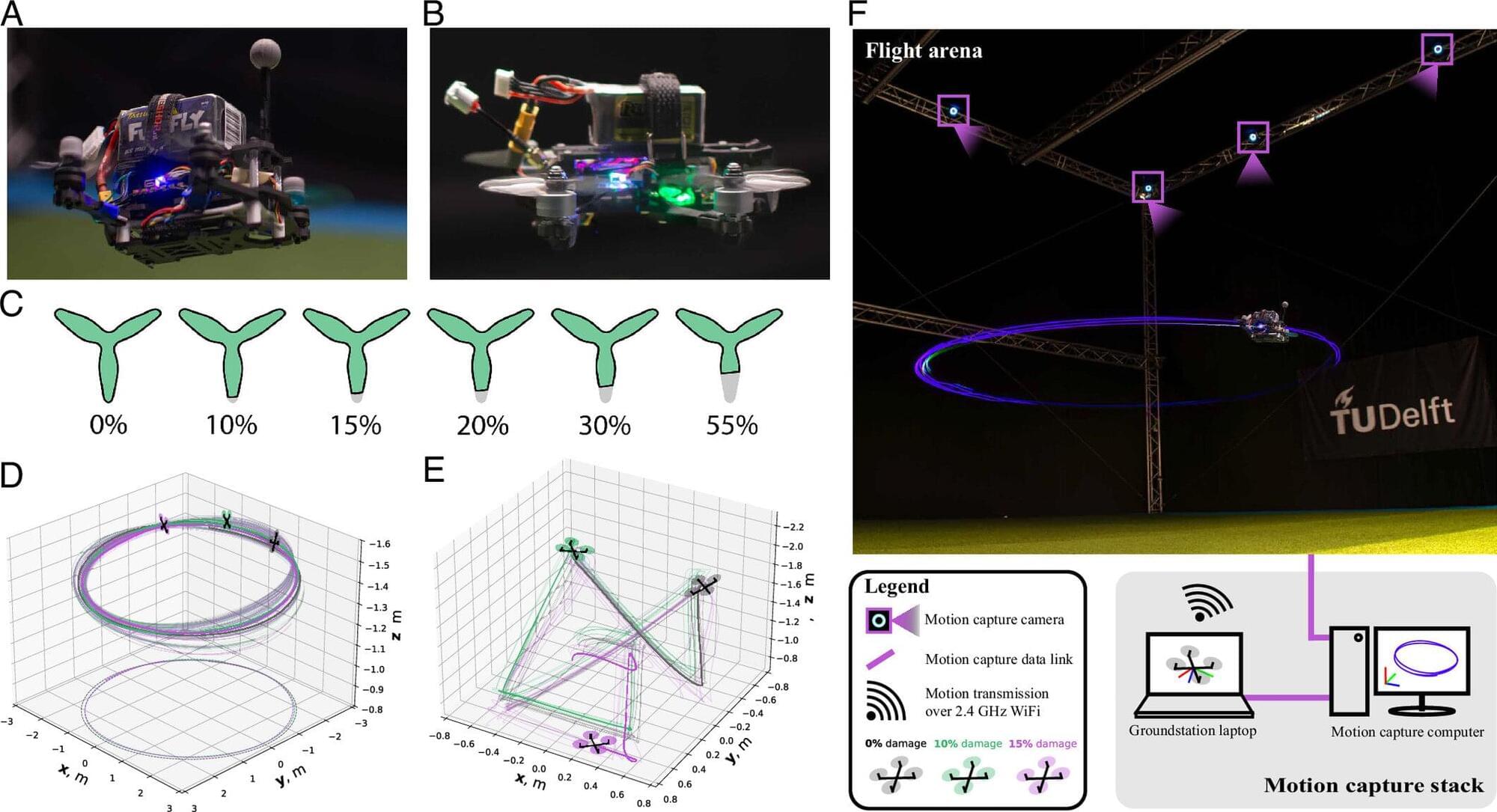
Imagine you’re running and you sprain your ankle. The pain makes you gingerly limp the rest of the way home. This is a great example of how nature adapts to failures in a system. The pain tells you: “If you continue running like normal, the injury will only get worse.” So you naturally adjust the way you run. Drones currently cannot do this with a worn-out propeller.
Researchers from Delft University of Technology and Wageningen University & Research have now demonstrated that a concept we learned from nature, which was originally developed to predict collapse in ecosystems, can also help detect when engineered systems are heading toward failure. This is crucial for ensuring drone and autonomous vehicle safety as they increasingly become part of everyday life.
“You can compare our approach to the way humans experience pain. After an injury, pain provides immediate feedback about our condition and helps us judge what actions remain safe,” says Jasper van Beers, a researcher at Delft University of Technology. “Machines generally lack this form of self-awareness. The new indicators, derived from real-time measurement data, offer a first step toward giving engineered systems a similar ability to recognize when they are approaching their limits.”
GOLDEN, Colorado – Scientists are engaged in research with an eye toward transforming the cold climes of Mars into a far more humane place for Earthlings in the future.
One notion proposed is dispersion of an aerosol meant to motivate the warming of Mars’s atmosphere. The idea is projected to be a first step toward terraforming the Red Planet.
Emerging recently as a new field of study is “applied astrobiology” – to appraise what would be needed to create sustainable habitats and biospheres beyond Earth.
Explore the future of space habitats, from rotating cylinders and torus colonies to orbital cities, asteroid homes, and the megastructures humanity may one day live inside.
Get Nebula using my link for 50% off an annual subscription: https://go.nebula.tv/isaacarthur. Watch my exclusive video Nearby Supernovae: https://nebula.tv/videos/isaacarthur–… SFIA Merchandise: https://isaac-arthur-shop.fourthwall… 🌐 Visit our Website: http://www.isaacarthur.net ❤️ Support us on Patreon: / isaacarthur ⭐ Support us on Subscribestar: https://www.subscribestar.com/isaac-a… 👥 Facebook Group: / 1,583,992,725,237,264 📣 Reddit Community: / isaacarthur 🐦 Follow on Twitter / X: / isaac_a_arthur 💬 SFIA Discord Server: / discord Credits: Space Habitats: The Megastructures We’ll Call Home Written, Produced & Narrated by: Isaac Arthur Editors: Briana Brownell, Ludwig Luska Select imagery/video supplied by Getty Images, Anthrofuturism, Apogii.uk, Bryan Versteeg, Fishy Tree, Katie Byrne, Jarred Eagley, Jeremy Jozwik, Justin Dixon, Ken York YD Visual, Neil Blevins, Sergio Botero, Steve Bowers, and Udo Schroeter Music by Epidemic Sound: http://nebula.tv/epidemic and Markus Junnikkala, Phase Shift, Kai Engel, Chris Zabriskie, Taras Harkavyi, and Stellardrone 0:00 Intro 4:37 The Sunflower 14:07 The O’Neill Cylinder 49:00 Lewis One 57:40 Stanford Torus 1:22:19 Kalpana One 1:28:14 Nebula 1:29:27 Bernal Sphere 1:54:13 Bishop Ring 2:03:23 Topopolis 2:27:36 McKendree Cylinder 2:33:57 Hammer Habs 2:59:01 Rungworlds 3:04:35 Conglomerations 3:38:45 Epilogue.
🛒 SFIA Merchandise: https://isaac-arthur-shop.fourthwall… 🌐 Visit our Website: http://www.isaacarthur.net. ❤️ Support us on Patreon: / isaacarthur. ⭐ Support us on Subscribestar: https://www.subscribestar.com/isaac-a… 👥 Facebook Group: / 1583992725237264 📣 Reddit Community: / isaacarthur. 🐦 Follow on Twitter / X: / isaac_a_arthur. 💬 SFIA Discord Server: / discord. Credits: Space Habitats: The Megastructures We’ll Call Home. Written, Produced \& Narrated by: Isaac Arthur. Editors: Briana Brownell, Ludwig Luska. Select imagery/video supplied by Getty Images, Anthrofuturism, Apogii.uk, Bryan Versteeg, Fishy Tree, Katie Byrne, Jarred Eagley, Jeremy Jozwik, Justin Dixon, Ken York YD Visual, Neil Blevins, Sergio Botero, Steve Bowers, and Udo Schroeter. Music by Epidemic Sound: http://nebula.tv/epidemic and Markus Junnikkala, Phase Shift, Kai Engel, Chris Zabriskie, Taras Harkavyi, and Stellardrone.